
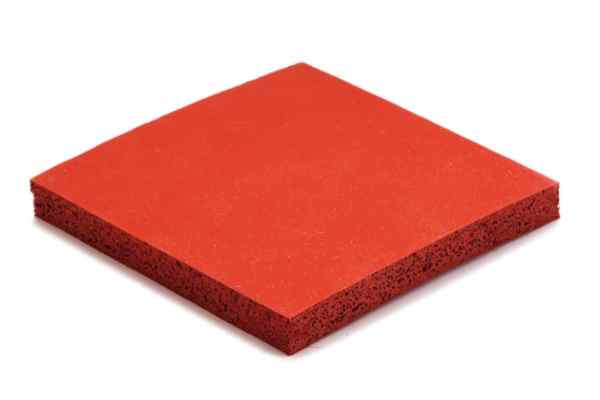
Industrial applications don’t forgive material failure. Whether it’s excessive heat, fire exposure, harsh chemicals, or long-term compression, the wrong foam choice can lead to breakdowns, safety risks, and costly downtime. This is why Silicone Foam has become a preferred material across industries that operate in extreme conditions.
From high-temperature sealing and fire protection to insulation and vibration control, silicone foam delivers reliable performance where conventional foams struggle to survive.
Understanding Silicone Foams and Its Core Properties
Silicone Foams is an elastomeric foam produced from Silicone rubber, engineered to perform in environments that exceed the limits of standard polymer foams. Its performance advantages are built into the material at a molecular level, not added through surface coatings or chemical fillers.
Unlike traditional foams, silicone foam retains its elasticity, shape, and sealing efficiency even after prolonged exposure to heat, flame, and environmental stress. This makes it a dependable solution for both indoor and outdoor industrial applications.
Why Industries Are Moving Away from Conventional Foam Materials
Materials such as EPDM, neoprene, polyurethane (PU), and EVA foam are widely used in general applications. However, when exposed to continuous heat, UV radiation, or compression cycles, these materials often degrade faster than expected.
Silicone foam overcomes these limitations by offering:
- Stable performance at extreme temperatures
- Natural resistance to flame and fire spread
- Minimal compression set over long durations
- Strong resistance to weathering, ozone, and UV exposure
- Consistent sealing under mechanical stress
For industries focused on long-term reliability rather than short-term cost savings, silicone foam proves to be a smarter material choice.
Performance in Extreme Temperature Conditions
One of the most important reasons silicone foam is used in demanding environments is its exceptional temperature tolerance. While many foams lose flexibility or collapse under heat, silicone foam continues to perform across a wide thermal range.
It can operate reliably in both high and low temperatures, making it suitable for applications involving:
- Continuous heat exposure
- Thermal cycling
- Hot machinery enclosures
- Fire-rated assemblies
- Cold-to-hot environmental transitions
This stability ensures that seals remain intact and insulation properties are maintained even after years of service.
Fire Safety Without Compromise
Fire resistance is no longer optional in many industries—it’s a regulatory requirement. Silicone foam offers inherent flame-retardant properties, meaning it does not depend on chemical treatments to meet safety standards.
When exposed to fire, silicone foam typically self-extinguishes and emits low smoke with minimal toxic by-products. This makes it highly suitable for environments where evacuation safety, equipment protection, and compliance are critical.
Industries benefiting from this include:
- Railways and mass transit
- Aerospace and defense
- Electrical enclosures
- Construction and infrastructure
- Industrial HVAC systems
Importance of Closed-Cell Structure in Silicone Foams
Silicone foams is commonly manufactured in a closed-cell structure, which significantly enhances its functional performance.
This structure allows the foam to:
- Resist water and moisture absorption
- Prevent air and dust infiltration
- Improve thermal insulation efficiency
- Maintain consistent sealing pressure
Because of these properties, closed-cell Silicone foams is widely used in gasketing, enclosure sealing, and insulation systems exposed to moisture, chemicals, or fluctuating temperatures.
Industrial Applications Where Silicone Foams Excels
Silicone foams is not limited to a single use case. Its versatility allows it to support a wide range of industries and applications.
Automotive & Electric Vehicles
Used in thermal insulation, vibration damping, noise control, and sealing of components exposed to engine heat and battery systems.
Electronics & Electrical Equipment
Protects sensitive components by providing insulation, cushioning, and protection against heat and environmental exposure.
Aerospace & Defense
Applied in fire barriers, environmental seals, and vibration isolation systems where material failure is unacceptable.
Construction & HVAC
Used in fire-rated seals, glazing applications, duct insulation, and expansion joints that demand weather and heat resistance.
Medical & Industrial Equipment
Certain grades are suitable for hygienic environments, offering resistance to repeated cleaning, heat, and chemicals.
Longevity and Cost Efficiency Over Time
While silicone foam may have a higher initial cost than conventional foams, it delivers significant long-term value. Its resistance to aging, deformation, and environmental degradation reduces the need for frequent replacements.
This results in:
- Lower maintenance costs
- Fewer system failures
- Improved operational safety
- Extended product life cycles
For industries focused on reliability and lifecycle performance, silicone foam offers excellent return on investment.
Selecting the Right Silicone Foam for Your Application
Choosing the right silicone foam depends on several factors, including:
- Operating temperature range
- Required compression and sealing force
- Fire safety and regulatory needs
- Exposure to chemicals or weather
- Fabrication and installation requirements
Partnering with an experienced manufacturer ensures the material is tailored to meet both functional and compliance standards.
How Fusion Foams Delivers High-Performance Silicone Foam Solutions
Fusion Foams specializes in manufacturing and supplying Silicone foam sheets, rolls, and custom-cut components designed for demanding industrial applications. With a focus on quality, consistency, and customization, Fusion Foams supports industries that require materials engineered for extreme conditions.
From precision cutting to application-specific grades, Fusion Foams ensures silicone foam solutions that perform reliably, even in the harshest environments.
Frequently Asked Questions (FAQs)
What are the common uses of silicone foam?
Silicone foam is used for sealing, insulation, cushioning, vibration control, and fire protection in high-temperature and safety-critical environments.
Is silicone foam better than rubber foam?
Yes. Silicone foam offers superior heat resistance, flame retardancy, UV stability, and long-term flexibility compared to conventional rubber foams.
Can silicone foam withstand continuous heat exposure?
Silicone foam can operate continuously at high temperatures (up to approximately 230°C) without losing elasticity or sealing performance.
Is silicone foam suitable for outdoor use?
Absolutely. Silicone foam resists UV radiation, ozone, moisture, and extreme weather, making it ideal for outdoor and exposed applications.
Final Thoughts
Silicone foam has become an essential material for modern industries that demand performance without compromise. Its ability to withstand extreme heat, resist fire, and maintain long-term sealing integrity makes it a dependable solution across multiple sectors.
For applications where safety, durability, and reliability matter most, silicone foam remains one of the most advanced foam materials available today. Get Direction