
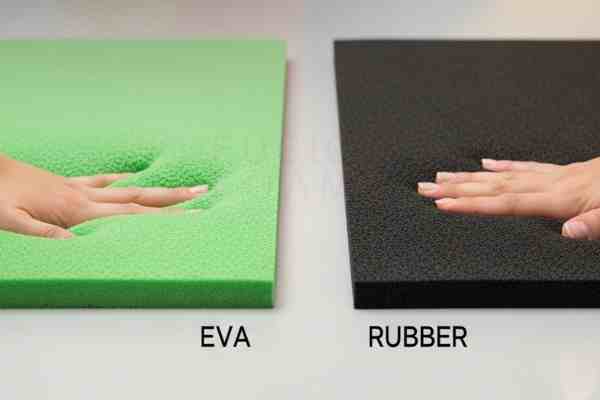
Cushioning materials play a critical role in industries where comfort, impact absorption, and durability matter. From footwear and sports equipment to packaging and automotive interiors, selecting the right cushioning material directly affects product performance and user experience. Two commonly compared materials are EVA Foam and traditional Rubber.
While both provide shock absorption, they behave very differently under load, repeated use, and environmental exposure. This article explains how EVA foam compares with rubber for cushioning applications and helps you choose the right material based on performance needs.
What Is EVA Foam?
EVA foam, short for Ethylene Vinyl Acetate foam, is a closed-cell polymer material known for its lightweight structure, softness, and elasticity. It is widely used in applications where comfort, flexibility, and impact absorption are essential.
Common uses include footwear midsoles, yoga mats, sports equipment, protective packaging, and interior cushioning. Due to its closed-cell structure, EVA foams resists water absorption and maintains its shape even after repeated compression, making it reliable for long-term cushioning performance.
What is Rubber ?
Rubber, including both natural and synthetic variants, has long been used for shock absorption because of its strength and resilience. Rubber materials are generally denser, heavier, and firmer than foam-based alternatives.
While rubber delivers excellent durability and abrasion resistance, it is often selected for load-bearing or mechanical applications rather than comfort-focused cushioning. Products such as vibration mounts, anti-fatigue mats, industrial bumpers, and automotive components rely on rubber for durability under stress. However, rubber can feel stiff during prolonged use, limiting comfort in ergonomic applications.
Cushioning Performance: EVA Foams vs Rubber
- Shock Absorption & Comfort
EVA foams excels at absorbing impact and distributing pressure evenly, making it ideal for low- to medium-load cushioning. Its elastic structure allows it to compress and recover quickly, reducing strain on joints and contact surfaces.
Rubber is firmer and absorbs shock with less energy return. While effective in industrial settings, it often feels rigid in applications requiring prolonged comfort.
Best for comfort-driven cushioning: EVA foam
- Weight & Flexibility
EVA foam’s low density is one of its biggest advantages. It delivers effective cushioning without adding unnecessary weight, improving comfort, and reducing transportation costs.
Rubber is significantly heavier, which can limit flexibility and increase overall product weight. In wearable or ergonomic products, this added weight can reduce usability.
Best for lightweight applications: EVA foams
- Durability & Lifespan
Rubber typically outperforms EVA foams in high-load and high-impact environments. Its resistance to wear, heat, and continuous compression makes it suitable for industrial and mechanical cushioning.
EVA foams remains resilient under regular use but may show compression set faster in heavy-load applications.
Best for high-load durability: Rubber
- Water & Chemical Resistance
EVA foams offers excellent water resistance due to its closed-cell structure, making it suitable for aquatic gear, outdoor padding, and moisture-prone environments.
Rubber provides moderate chemical resistance but may degrade when exposed to oils, fuels, or extreme temperatures unless specially formulated.
Best for moisture resistance: EVA foam
- Compression Set & Shape Retention
High-quality EVA foam maintains cushioning performance under repeated compression, ensuring long-term comfort.
Rubber also handles repeated compression well, but lower-grade variants may harden or lose elasticity over time.
Both materials perform well; EVA foam retains comfort more effectively
- Environmental Resistance
EVA foam resists moisture, sweat, and humidity while preventing mold and odor buildup.
Rubber generally resists water but may degrade faster under prolonged UV, ozone, or heat exposure without special additives.
Best for moisture-prone environments: EVA foam
- Design Flexibility & Customization
EVA foams is easy to cut, mold, and fabricate into complex shapes. It is available in multiple densities, thicknesses, and colors, making it ideal for customized cushioning designs.
Rubber fabrication often requires complex tooling and longer production cycles, increasing cost and lead time.
Best for design flexibility: EVA foam
Cost Comparison : EVA Foam vs Rubber
EVA foam is generally more cost-effective for lightweight and comfort-focused cushioning due to lower material weight, easier processing, and reduced manufacturing costs.
Rubber, while more expensive upfront, provides better long-term value in applications that require high load-bearing capacity, abrasion resistance, and extended service life.
Typical Cushioning Applications
EVA Foam is commonly used in:
- Footwear midsoles and insoles
- Sports mats and protective padding
- Packaging inserts for impact protection
- Automotive interior cushioning
- Medical and orthopedic supports
Rubber is commonly used in:
- Industrial vibration pads
- Machinery mounts
- Heavy-duty flooring
- Abrasion-resistant surfaces
- Automotive and industrial components
EVA Foam vs Rubber: Quick Comparison
| Property | EVA Foam | Rubber |
| Weight | Very light | Heavy |
| Shock absorption | Excellent | Good |
| Comfort | High | Moderate |
| Durability | Moderate | High |
| Water resistance | High | Moderate |
| Best use | Comfort & low-impact | Heavy-load & industrial |
| Cost | Lower | Higher |
Which Material Should You Choose?
- Choose EVA foam when comfort, lightweight cushioning, flexibility, and moisture resistance are priorities.
- Choose rubber when load-bearing capacity, abrasion resistance, and mechanical durability are critical.
For most comfort-driven cushioning applications, EVA foams consistently outperforms traditional rubber materials.
Final Thoughts
EVA foam has become the preferred cushioning material across multiple industries due to its comfort, lightweight structure, and adaptability. While rubber remains essential for demanding mechanical applications, EVA foams offers a more ergonomic and versatile solution for cushioning needs.
By aligning material properties with application requirements, manufacturers can improve product performance, durability, and user satisfaction.
Frequently Asked Questions (FAQs)
Q1. Which is more cost-effective for cushioning, EVA foams or rubber?
EVA foams is generally more cost-effective for cushioning applications that prioritize comfort, lightweight performance, and flexibility. Rubber may offer better long-term value in heavy-duty or industrial environments.
Q2. Is EVA foam durable enough for daily use?
Yes, EVA foam performs well in daily-use cushioning applications such as footwear, sports mats, and protective padding. However, for high-load or abrasive environments, rubber may be more suitable.
Q3. Does EVA foams lose shape over time?
High-quality EVA foams retains its shape well under repeated compression. In extreme load conditions, some compression set may occur, which is why rubber is preferred for heavy-duty applications.
Q4. Can rubber be used for comfort-focused cushioning?
Rubber can provide cushioning, but it generally feels firmer and heavier than EVA foam. For comfort-driven applications, EVA foam is typically the better choice.
Q5. Which material is better for moisture-prone environments?
EVA foams is better suited for moisture-prone environments due to its closed-cell structure, which resists water absorption and prevents mold or odor buildup.
Get Direction, Visit us – Fusion Foam